
HOA financial transition: how to hand off the books without losing a step

A new treasurer takes over in January and asks for the books. She gets a shoebox of statements, a spreadsheet nobody has updated since June, and a password nobody remembers. Two months later, a vendor calls about an unpaid invoice that nobody knew existed.
An HOA financial transition is any time the books change hands: a new treasurer, a new management company, or the day a developer hands the community to the owners. This guide shows what to collect, who should check it, and a simple plan for the first 90 days.
What an HOA Financial Transition Is
A financial transition is a handoff of the association’s money records and money duties from one person or group to another. Three situations come up:
- A new treasurer or board: volunteers change after an election or a resignation.
- A new management company: the board moves to a different company or takes over from one. Our post on terminating a management company covers that process.
- Turnover from the developer: a new community moves from developer control to an owner-elected board. Our overview of HOA transition explains how that works.
Each has different paperwork, and all three need the same careful look at the numbers.
Here is a simple example. A 60-home community has a $126,000 yearly budget, made of $96,000 for operating costs and $30,000 for the reserve fund. At the handoff, the new treasurer finds $80,000 in the reserve account. The reserve study says the community should have $140,000 by now. The reserve is 57% funded, so she knows on day one that the budget needs attention. Our guide to reserve studies explains what percent funded means.
Why It Matters for HOAs
A messy handoff hides problems until they cost money. Unpaid bills, expired insurance, missed tax filings and underfunded reserves often surface months later, when they are harder to fix. Owners lose trust when the new board cannot explain the numbers.
The risks are the same in every type of handoff:
- Missing records: bank statements, contracts and approvals that live in one person’s files.
- Unclear access: bank accounts and online tools that still list former volunteers.
- Hidden obligations: contracts that renew, bills in the mail and loans or special assessments in progress.
- Unfunded reserves: a gap between what the community has saved and what it will need.
- Broken communication: owners hear rumors before they hear facts.
A developer turnover adds another risk. The new owner-run board takes on the community’s finances with whatever condition they are in, and state law may give the board rights to records and a chance to review them. Ask an attorney and an accountant who know your state to review the turnover documents before you sign anything.
How HOA Boards Should Handle It
Plan the handoff before it starts, and make one person responsible for checking it.
What to collect
The picture below shows the core items for each type of transition. Use it as a starting list, then add anything your documents or accountant ask for.
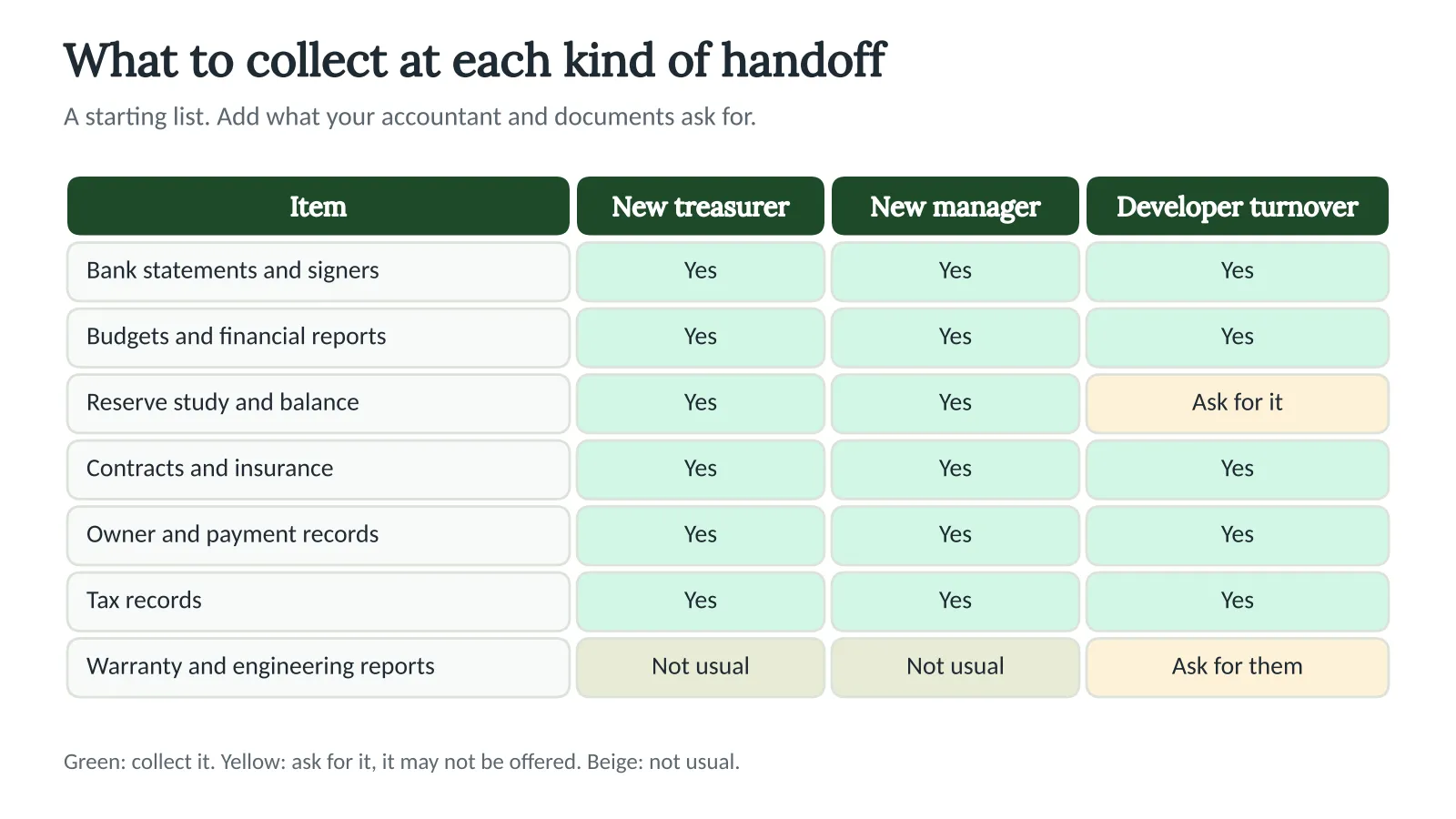
Core handoff items
- Bank and reserve account statements for the past 12 months or more
- The current budget and the last two years of budgets
- Monthly financial statements and the most recent year-end report
- The latest reserve study and the reserve account balance
- A list of every contract, with end dates and renewal terms
- Insurance policies and certificates
- Tax returns and filing dates
- A list of owners who are behind on assessments, and any payment plans
- Open invoices and anything approved but not yet paid
- A list of who can sign checks, access accounts and approve payments
Use a 90-day plan
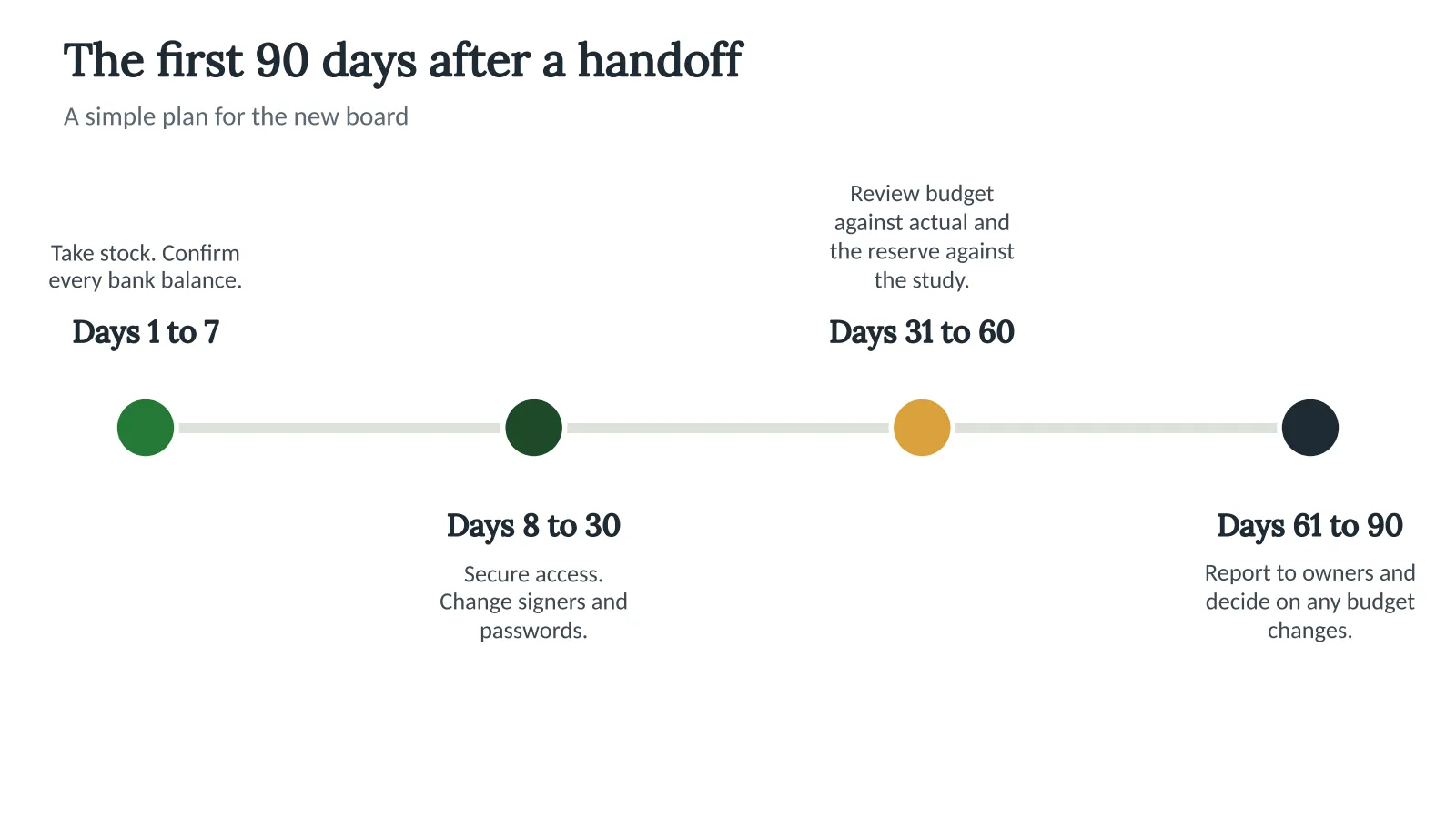
The first 90 days
- Days 1 to 7: take stock. Collect the items above. Confirm every bank balance with a statement. List who has access to each account.
- Days 8 to 30: secure access. Change signers, passwords and recovery contacts. Update the insurance agent and the bank with the new officers.
- Days 31 to 60: review the numbers. Compare the budget with actual spending, check the reserve against the study, and list bills coming due in the next 90 days.
- Days 61 to 90: report and plan. Share a plain summary with owners and decide whether the budget needs changes.
Bring in help when it matters
An accountant who knows associations can review the books, and an attorney can read the turnover documents and tell you what your state requires. Ask for a review of the financial statements before you accept them as correct. Our guide to financial management for community associations and our post on building a transition team explain who should be involved.
Keep owners in the loop
Tell owners that the handoff is happening, what the board is doing and when they will hear more. Share a short summary after the first review, and use plain words. Our financial transparency guide explains how to keep that habit going.
How Technology Can Help
A handoff is easiest when the records are already in one place. Neighborhood.online keeps every document in one place, searchable inside, so the next treasurer can find the budget, the reserve study, the contracts and the board’s decisions without a scavenger hunt. You can upload documents as they are, even scans, and you see what is missing.
Vendors sit in one list with contract dates, insurance and W-9 status, and Neighborhood.online warns before insurance lapses or a contract runs out, which covers the hidden obligations. When the new board reviews and proposes the next budget, it has a clean audit trail showing who changed what. Notices to owners about the handoff can be written once and sent the way each neighbor asked, with a record of who got them, and nothing goes out until the board approves it.
Key takeaways
- A financial transition happens with a new treasurer, a new manager or a developer turnover, and each needs a written handoff.
- Collect bank statements, budgets, reserve studies, contracts, insurance, tax records and a list of who has access.
- Secure access first, then review the numbers, then report to owners in plain words.
- Ask an accountant and an attorney to review the books and any turnover documents.
- Keep every document where the next board can find it.
Frequently asked questions
What should an outgoing HOA treasurer hand over?
Bank and reserve statements, budgets, financial reports, the reserve study, contracts, insurance policies, tax records, a delinquency list, open invoices and a list of everyone with access to accounts.
How do we check the books after a handoff?
Match every bank balance to a statement, compare the budget with actual spending, and ask an accountant who knows associations to review the financial statements. Do this in the first 30 to 60 days.
What happens to finances when a developer turns the community over?
The owner-elected board takes responsibility for the finances, and state law may require the developer to hand over certain records. Ask an attorney and an accountant to review the turnover documents before accepting them.
Should owners be told about a financial transition?
Yes. A short, plain update on what is changing and when they will hear more prevents rumors and builds trust.
This post is general information, not legal advice. Laws change, and your governing documents may add rules of their own. We recommend consulting an attorney. We can help you find one.


