
Collecting Assessments and Handling Delinquencies

Assessments pay for the things that keep a community running: landscaping, insurance, repairs, and the reserve fund for big projects. When some assessments arrive late or not at all, the budget gets tight, projects slip, and neighbors start to take sides.
If you serve on a board, you are probably a volunteer who did not sign up to chase payments. A simple, written process makes this part of the job calmer for everyone. This guide walks through one.
A quick note on terms. An assessment is the amount each owner pays to fund the community. A delinquency is an assessment that was not paid by its deadline.
Set Clear Policies and Share Them
Start with a written policy. It should say:
- When assessments are due.
- How owners can pay.
- What late fees apply, if your governing documents allow them.
- What steps the board will take if a payment is missed.
Governing documents are the rule books your HOA already has, like the bylaws and the covenants. Check them first, since they set limits on what a board can do.
Once the policy is written, share it. Put it in the welcome packet for new owners, post it on the community website, and repeat it in newsletters. When owners can read the policy for themselves, there is less room for confusion later. A board that shares its finances openly finds it easier to explain why the policy exists.
Make Paying Easy
The easier it is to pay, the easier it is for owners to pay on time. Offer more than one way, such as:
- Automatic withdrawals from a bank account
- Checks or money orders
- In-person payments at an office hour or community event
How payments are received and recorded depends on your community. Some boards use their bank, some use a payment service, and some rely on a management company or bookkeeper. Choose the setup that fits your community, and write it into the policy.
Send Reminders Before the Deadline
Sometimes an owner forgets a date or misses a bill in the mail. A friendly reminder a week or two ahead can prevent a late payment. Use more than one channel, such as email and a mailed notice, so the message reaches everyone.
Keep a record of each reminder: who got it, how it was sent and when. If a payment is missed later, you will have proof that the owner was told.
A Free Reminder Template
Late-payment letters are hard to write. Our Delinquent Account Reminder Notification template gives you a calm, professional starting point that you can adjust to match your own policy.
Treat Every Late Payment the Same Way
When a payment is missed, act soon and act consistently. Write down a step-by-step process that matches your governing documents and your state’s rules. One way to set it up:
- A friendly reminder that the payment is past due.
- A formal written notice if the payment is still missing after a set number of days.
- A meeting with the board, or a call, to talk through options.
Whatever steps you choose, apply them to every owner. No exceptions and no favorites. Fair treatment is what keeps trust intact when a conversation gets hard.
Consider a Payment Plan
Sometimes an owner is going through a hard time. A payment plan lets them pay what is past due in smaller pieces over a set schedule. Put the plan in writing, with dates and amounts, and have the board approve it. A plan shows owners that the board is willing to work with them, and it still protects the community budget.
Know When to Escalate
If reminders and payment plans do not work, the board may need to take a bigger step. That can include hiring a collection agency, placing a lien, or going to court. A lien is a legal claim against a property for an unpaid amount. These steps are a last resort. The rules for each one depend on your governing documents and your state, so talk to an attorney before you start, and keep a record of every step you take.
Keep the Community Informed
Never share one owner’s personal financial details with the rest of the community. You can still report on the overall picture: how assessments are used, how collections are going in general terms, and why paying on time matters to everyone. A short note in each newsletter is enough. For more ideas, see this guide to financial management for community associations.
Build a Culture of Accountability
Owners are more likely to pay on time when they can see what their assessments do. Show them. Share photos of a finished repair, host an event at the newly painted clubhouse, and explain how the reserve fund protects everyone.
How Technology Can Help
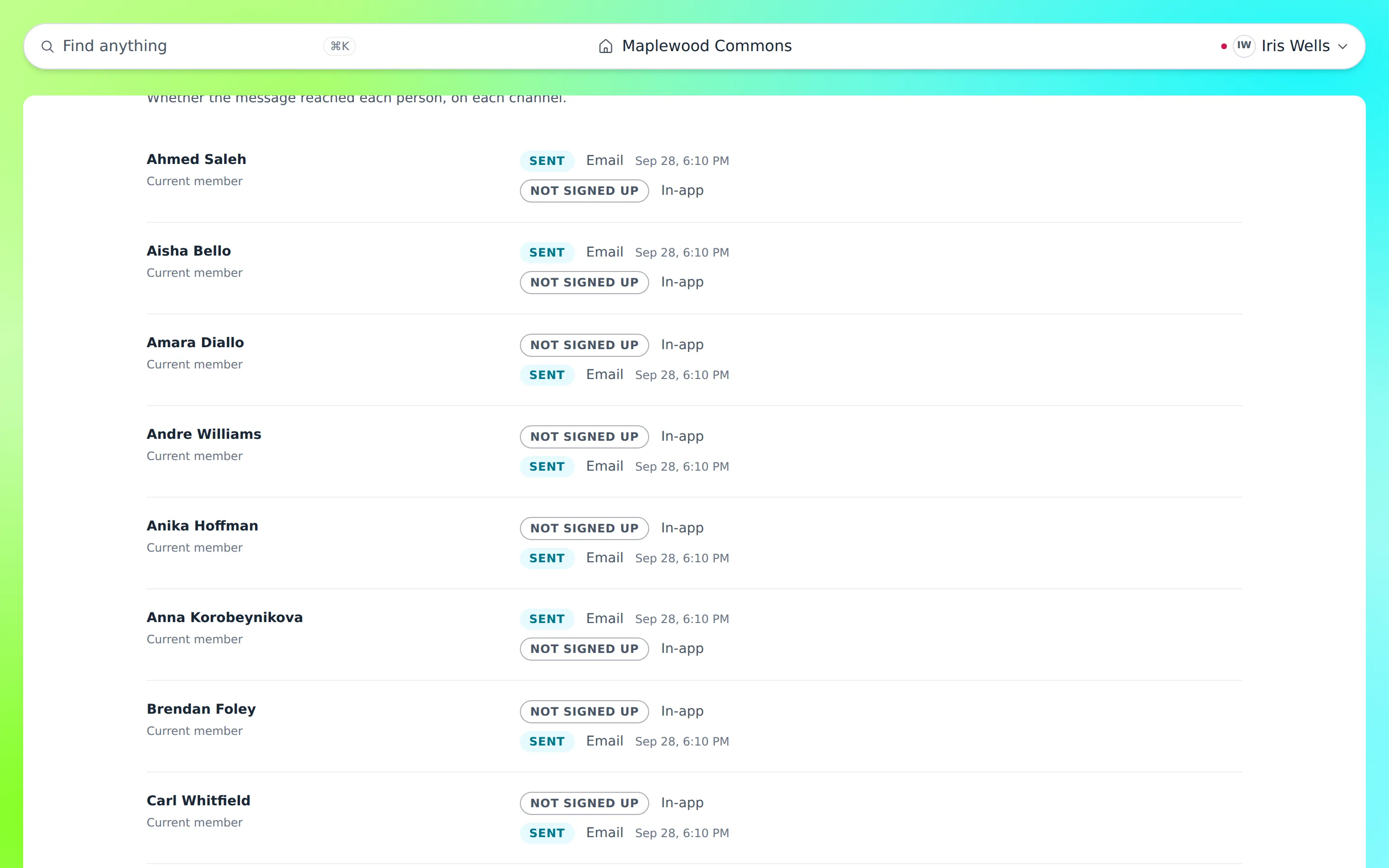
Neighborhood.online helps with the communication around late payments. The board can draft a reminder notice, review it, and approve it. Nothing goes out until the board approves it. The notice can go by email, first-class mail or certified mail, and the board keeps a record of who received it, how it was sent and when. Your payment policy, board minutes and notices all stay in the Records Room, so a new board member can find them without digging through old email.
The payment side stays with your bank, payment service or bookkeeper.
You can start on the Free plan, which includes a community website and a home for your documents.
Conclusion
A fair assessment process comes down to four habits: write the policy, share it, remind owners early, and treat every late payment the same way. If you do only one thing this month, check that your policy is written down and that owners can find it.
This post is general information, not legal advice. Laws change, and your governing documents may add rules of their own. We recommend consulting an attorney. We can help you find one.


