
HOA meeting follow-through: how to turn decisions into action

An HOA meeting ends with a dozen promises to look into things. Three weeks later, no one remembers what was decided, who was responsible or what happens next. Owners get frustrated, board members feel stuck, and the neighborhood loses trust in the process.
The fix is not to hold more meetings or talk longer. It is HOA meeting follow-through: a simple way to track each decision until it is done.
What HOA Meeting Follow-Through Is
Follow-through means that every decision made in a meeting has a name, a date and a place where the board can see it. It covers the agenda before the meeting, the action items during it and the minutes and check-ins after it.
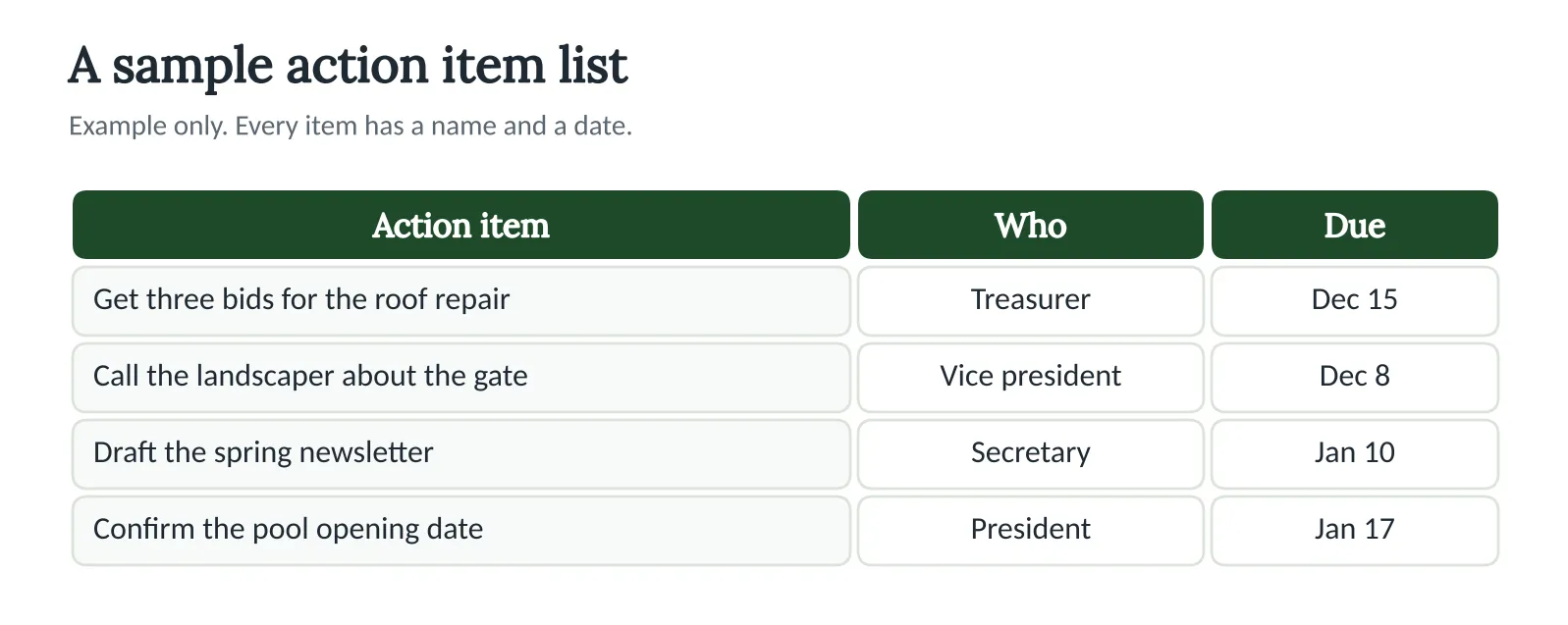
Picture a board that agrees to get three bids for a roof repair. With follow-through, the treasurer’s name and a due date go next to that item, and the board looks at it again at the next meeting.
Why Follow-Through Matters for HOAs
When tasks are unclear, people forget or assume someone else is handling them. Projects slip, and the same topic comes back on the agenda month after month.
Follow-through also builds trust. When owners see action after meetings, they pay more attention to the process. When board members know their tasks will be reviewed, they finish them more consistently.
How HOA Boards Should Handle Follow-Through
Set Clear Goals Before the Meeting
A shared agenda keeps the board focused and prevents an open discussion from taking over the hour. Send the agenda ahead of time, and list what the board needs to decide, not just what it will talk about.
Write Action Items as They Come Up
During the meeting, write each action item down as soon as it is agreed. Put a name next to every one, not a vague “we’ll handle that.” The picture below shows a simple format.
Use Short Check-Ins
Follow-up meetings do not have to be long or formal. A quick 10-minute call can keep a project on track. A scheduling link or an online poll helps the board find a time without a long email chain.
Send the Minutes While the Meeting Is Fresh
Prepare and send the meeting minutes soon after the meeting. List the decisions, the person responsible and the deadline for each one. Minutes like these prevent misunderstandings and leave a record that supports the next board.
Build a Culture of Follow-Through
Start each meeting by reviewing the last one’s action items. Thank people who finished their tasks, and ask for help on the ones that are stuck. Good meeting etiquette keeps that review calm and fair.
How Technology Can Help
Email alone makes it easy for things to slip. Neighborhood.online gives the board tasks with an owner and a due date, so everyone can see what is done and what is still open.
Board meetings go step by step: the agenda starts with standing items filled in, the notice goes out on time, and minutes are drafted from the meeting. Nothing goes out until the board approves it. See how it works, or start with the Free plan, which gives a community a website and a home for its documents.
Conclusion
Meetings are where decisions get made, and follow-through is where progress begins. This month, put a name and a date next to every action item, and review the list at the start of the next meeting. For a wider view, read how to plan HOA meetings from start to finish.

